



Functional Training
Duration: 18 Hours
The Functional Training course at the International Fitness Training Academy (IFTA), Mumbai is designed to help trainers and fitness enthusiasts improve strength, mobility, balance, coordination, and agility through practical, real-world movement patterns. Functional training enhances everyday performance, supports sports activities, and reduces the risk of injury.
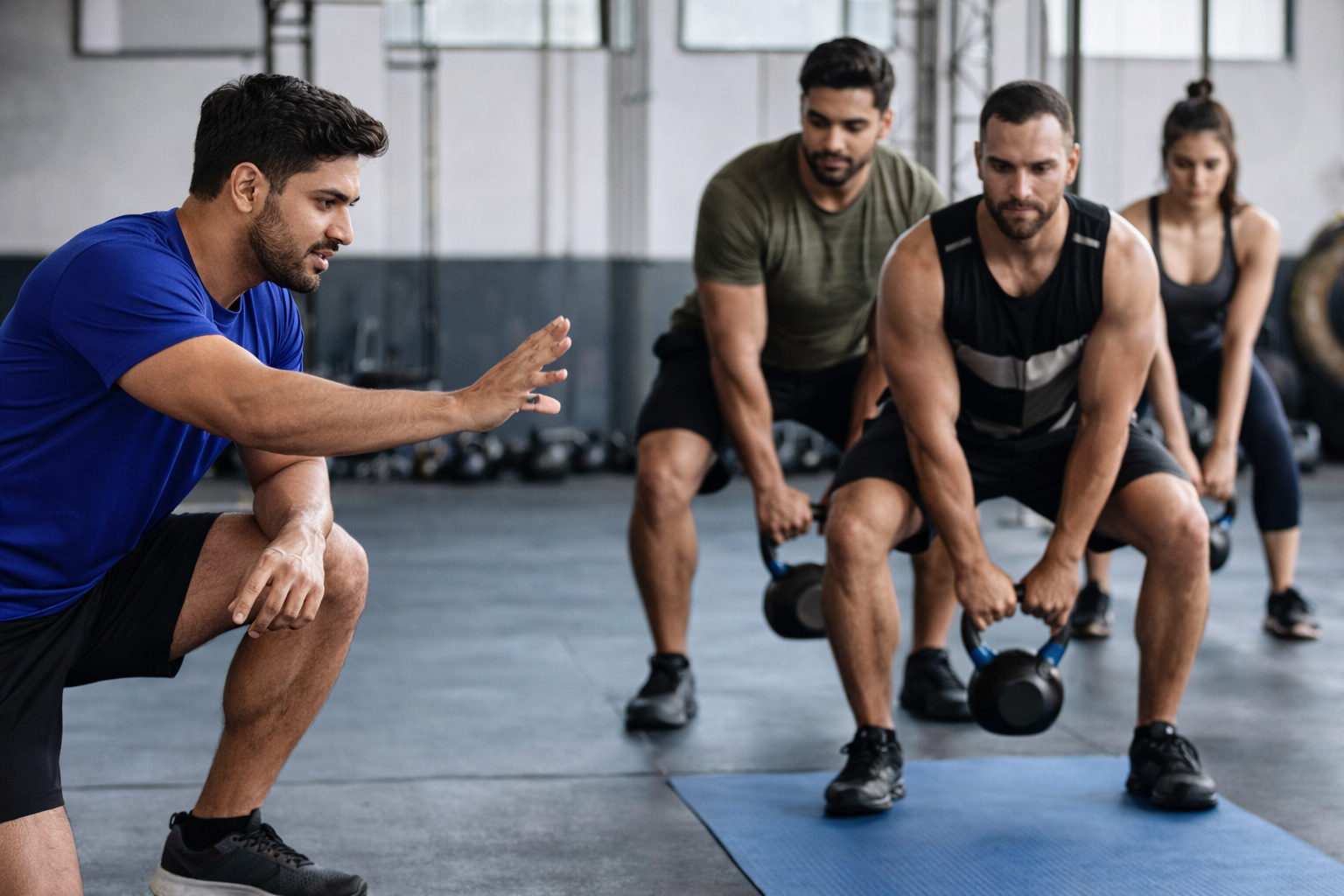
This program offers extensive hands-on training using modern functional tools such as kettlebells, suspension trainers, battle ropes, plyometrics, and animal flow techniques.
Course Curriculum
- Introduction to Functional Training
- Fundamentals of functional movement
- Benefits and applications of functional training
- Components & Application of Functional Training
- Key elements of functional fitness
- Designing functional training programs for clients
Specialized Training Modules
- Kettlebell Training
- Introduction and specifications
- Benefits of kettlebell training
- Types of movements
- Level 1 and Level 2 kettlebell techniques
- Practical exercises
- Power Bag Training
- Introduction and grips
- Training forms and variations
- Sample program with practical application
- Stability Ball & Medicine Ball Training
- Introduction to stability ball training
- Medicine ball training forms
- Wall ball training techniques
- Practical drills
- Agility Training
- Introduction and goals of agility training
- Key components and biomechanics
- Warm-up techniques
- Agility drills and practical exercises
- Battle Rope Training
- Introduction and materials
- Correct grips and stance
- Muscles worked during battle rope training
- Training components and biomechanics
- Benefits of battle rope exercises
- Variations and programming
- Suspension Training
- Basics of suspension systems
- Correct stance and belt parts
- Biomechanics of suspension training
- Benefits and training forms
- Practical exercises
- Tyre Training
- Introduction and grips
- Training forms
- Practical tyre-based drills
- Plyometric Training
- Fundamentals of plyometrics
- Correct form and safety considerations
- Exercises using plyo box, step-up boards, small tyres, cones, and hurdles
- Animal Flow Training
- Introduction to animal flow concepts
- Components and flow sequences
- Benefits of animal flow for strength and mobility
- Forms, stretches, and practical exercises
Course Outcome
On completion of this course, students will be able to design dynamic, functional, and result-driven workouts for clients of different fitness levels, enhancing performance, movement efficiency, and overall conditioning.
Certified and recognized by trusted government and international institutions.

